Good design helps people get things done with less friction
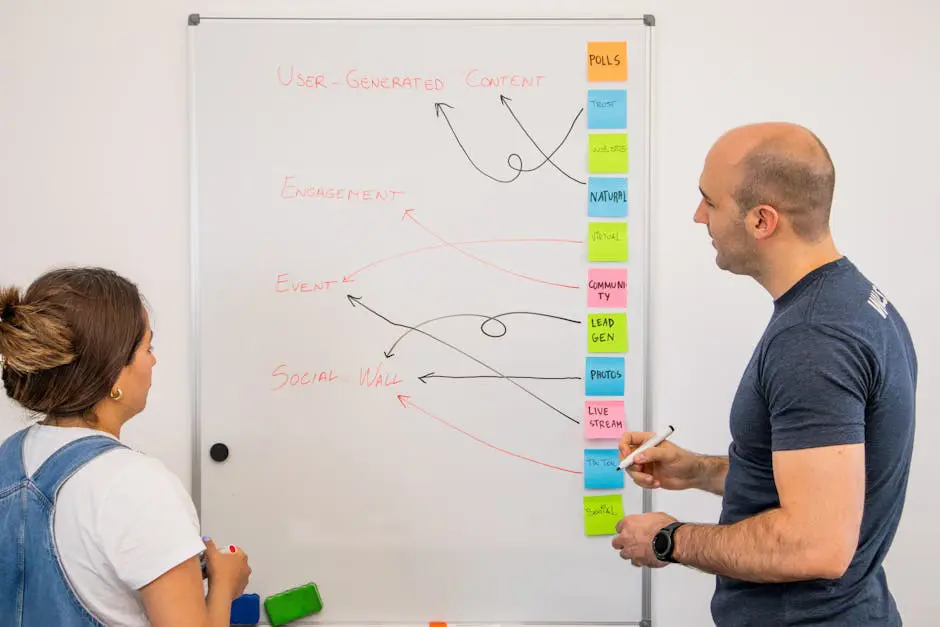
User experience UX design is the practice of shaping how people feel when they interact with a product, website, or app. For small businesses, startups, and nonprofits, it directly affects whether someone stays, trusts you, and takes the next step.
Here is a quick breakdown of what it covers.
| What it is | What it is not |
|---|---|
| The full journey a user takes through your product | Just how something looks |
| Research, testing, and iteration based on real user needs | A one-time design task |
| A mix of psychology, structure, and problem-solving | The same thing as UI (visual interface) design |
| Applied to websites, apps, and even physical products | Only relevant for big tech companies |
The term was coined by Don Norman in the early 1990s at Apple. He chose it because words like usability and human interface felt too narrow. The point still holds. The experience a person has with your product includes clarity, confidence, and whether it feels worth their time.
Think about the last time you landed on a website and immediately felt lost. You probably left. That is bad UX at work, and it costs businesses real customers every day.
Good UX design closes that gap. It is not about making things flashy. It is about making sure every step a person takes with your product feels natural, clear, and worth their time.
My name is Connor Lagman, and as the founder of Attention Digital, I have spent over a decade helping small businesses, startups, and nonprofits improve their online presence. User experience UX design sits at the core of almost everything my team builds. In the sections below, I will walk you through what matters and how to apply it without getting buried in jargon.
User experience ux design terms to remember.
At its heart, user experience UX design is a way of thinking. It is a human-centered approach that puts real needs at the center of an iterative problem-solving process. Human-centered means moving away from what we think looks cool and toward what helps a person solve a real problem. Whether you are running a local shop in Zionsville or a nonprofit in Indianapolis, your website should meet the customer where they are without fuss.

This process starts with empathy. We have to understand who our users are, where they are coming from, and what they are trying to accomplish. It is not about pushing solutions onto people. It is about building what they actually need. That requires iteration. You identify a problem through research, design a solution, test it with real people, and refine it based on what you learn.
One common misconception is that aesthetics do not matter if the site is functional. However, research suggests that Aesthetics are not important if you have good usability is actually a myth. Usability is the foundation, but a visually pleasing design builds trust. People are more likely to forgive minor issues in a product that looks professional and cared for. The goal is to balance usefulness, clarity, and visual credibility.
Why user experience ux design matters for your bottom line
Investing in UX is not just a “nice to have” for your business; it is a direct driver of growth. When a customer has a seamless experience, they are more likely to stay, return, and recommend you to others. This leads to higher retention rates and increased revenue. In fact, many teams now use AI to help sort through large sets of feedback to spot patterns. According to Figma’s 2025 AI report Many teams now use AI to help sort through large sets of feedback and surface patterns that might be hard to spot on their own. InFigma’s 2025 AI report, 40% of designers and 29% of developers said they use AI to analyze user data., 40 percent of designers are already using these tools to better understand user behavior.
The financial benefits are clear when you look at the professional landscape as well. For those considering a career shift, the research on UX Design salaries Payscale’sresearch on UX Design salaries shows that the average salary for a UX designer in the United States is around $74,000, compared to $41,000 for traditional graphic designers. For a business owner, this salary gap reflects the high value that companies place on the ability to convert visitors into loyal customers through better design.
Understanding these fundamentals is the first step toward a more profitable digital presence. As we often tell our clients in Westfield and Fishers, Every Business Owner Should Really Understand These Website Basics. When you prioritize the user, the business results tend to follow naturally.
The difference between UI and user experience ux design
It is very common to hear the terms UI and UX used interchangeably, but they represent different parts of the process. Think of UX as the blueprint of a house. It defines where the rooms go, how the plumbing flows, and how people move through the space. UI, or User Interface design, is like the interior design. It covers the paint colors, the hardware on the cabinets, and the overall visual style.
| Feature | User Experience UX Design | User Interface (UI) Design |
|---|---|---|
| Focus | The overall feel and logic of the journey | The visual and interactive elements |
| Goal | To make the product useful and easy to navigate | To make the product attractive and interactive |
| Output | Wireframes, user flows, and research reports | High-fidelity mockups, buttons, and icons |
| Tools | Surveys, interviews, and logic maps | Color palettes, typography, and animations |
While UI handles the “pixels,” UX handles the “people.” You can have a beautiful interface that is a total nightmare to use because the logic is broken. Conversely, a perfectly logical site that looks outdated might scare users away. Both must work together to create a successful product. For more on this, check out this UX vs UI comparison User experience (UX) design is the process used to create products that provide a positive experience for end users.UX design uses research to understand users, define problems, and develop ideas for solutions. It considers every interaction we have with a product or service. And that’s why UX desig…. If you are coming from a background in Graphic Design, you already have a head start on the visual side, but the research side of UX will be your new frontier.
Essential stages of the user experience ux design process
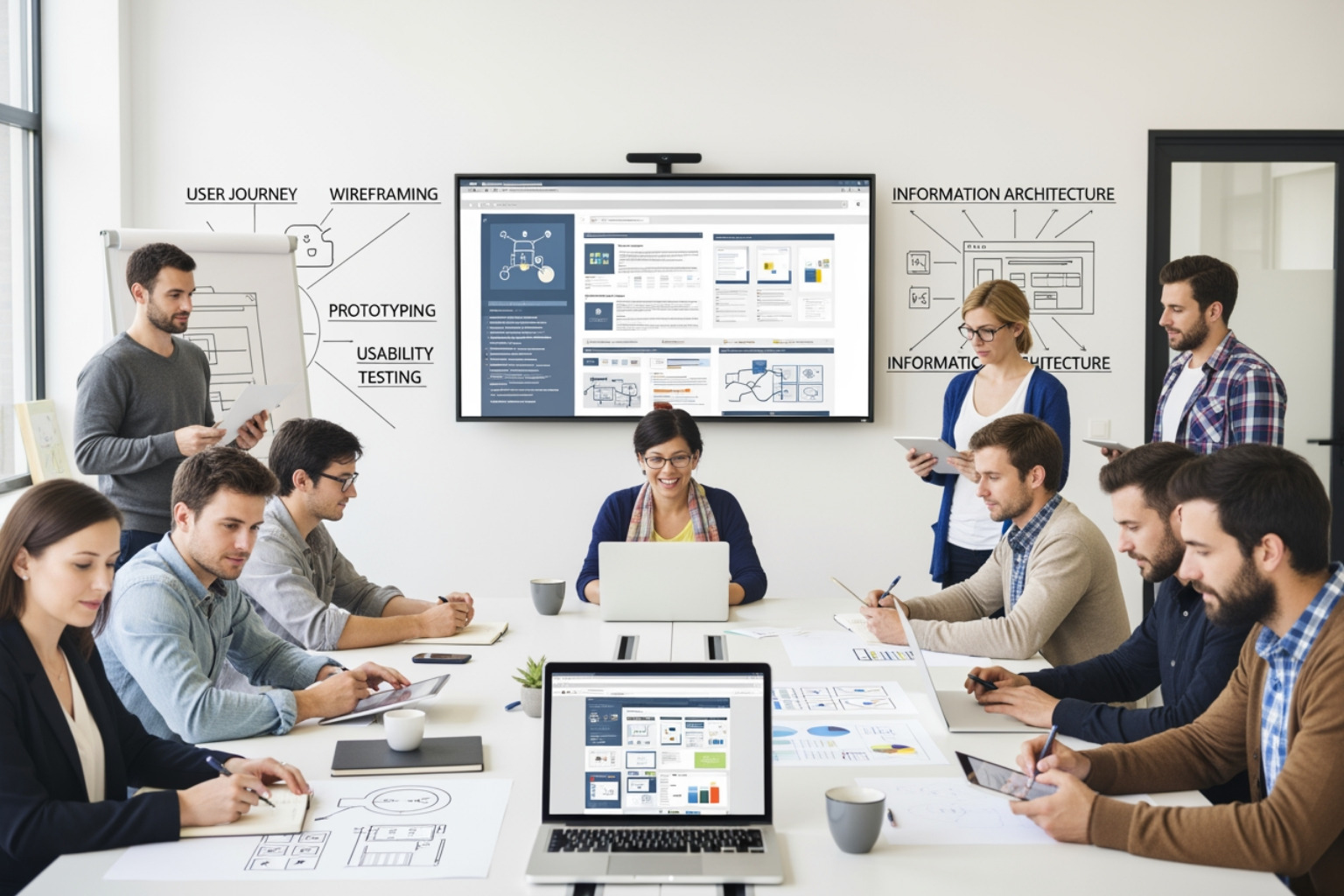
The UX process is not a straight line; it is a loop. We generally break it down into five key stages to ensure we are building the right thing for the right people.
- Define the Problem: We start by identifying exactly what pain point we are trying to solve. This often involves creating problem statements or flow diagrams to map out the current situation.
- Conduct Research: We talk to real users. This might involve interviews, surveys, or looking at data patterns. As noted in Figma’s 2025 AI report Many teams now use AI to help sort through large sets of feedback and surface patterns that might be hard to spot on their own. InFigma’s 2025 AI report, 40% of designers and 29% of developers said they use AI to analyze user data., AI is becoming a massive help in this stage to analyze feedback quickly.
- Design Prototypes: This is where we build the “skeleton” of the solution. We create wireframes and interactive prototypes to see how the flow feels before we commit to final code.
- Test and Gather Feedback: We put our prototypes in front of real people. We use methods like five second tests Thinking you understand users isn’t enough. Testing your wireframes and prototypes is a great way to get feedback and data that you can use to help decide what improvements to make. For example, runningfive second tests,navigation tests,preference tests, andfirst click tests. or first click tests Thinking you understand users isn’t enough. Testing your wireframes and prototypes is a great way to get feedback and data that you can use to help decide what improvements to make. For example, runningfive second tests,navigation tests,preference tests, andfirst click tests. to see if the design is intuitive.
- Iterate and Refine: Based on the testing, we go back and fix what didn’t work. This cycle continues even after launch through social monitoring and analytics.
Following this structured approach is what separates a professional Website Design from something that just looks okay but fails to convert.
Fundamental principles for creating intuitive products
To create a product that feels natural, we follow several fundamental UX design principles User experience (UX) design is the process used to create products that provide a positive experience for end users.UX design uses research to understand users, define problems, and develop ideas for solutions. It considers every interaction we have with a product or service. And that’s why UX desig…. These are the “laws” of the industry that help us stay focused on the user.
- Accessibility: Design should be inclusive. This means following WCAG guidelines to ensure people with different abilities can use your site. It is not just about being nice; it is about reaching your entire audience.
- Consistency: Users should not have to learn new rules for every page. If your “Submit” button is blue on one page, it should not be red on the next. This builds a sense of safety and predictability.
- Visual Hierarchy: You need to guide the user’s eye to the most important information first. We use size, color, and placement to make sure the “Call to Action” stands out.
- User Control: People hate feeling trapped. Always give them an “undo” button or a clear way to go back. This reduces frustration and builds confidence.
We also look at how people think to make designs more effective. By using 5 Ways to Use Psychology to Improve Your Digital Marketing Effectiveness, we can anticipate user behavior and design experiences that feel almost psychic.
Transitioning into a career as a professional designer
If you are looking to move into this field, there has never been a better time. You do not need a four-year degree in computer science to get started. In fact, the US Bureau Of Labor Statistics Earnings by education:US Bureau Of Labor Statistics shows that while education helps, skills and experience are the real currency in tech. Many successful designers transition from fields like psychology, marketing, or graphic design.
There are excellent, low-cost resources available to help you bridge the gap. Coursera.org You might also want to try the folks atCoursera.org, which is a low-cost but high-quality education provider which delivers courses on a wide range of subjects including UX. It does partner with universities and companies to offer courses, Professional Certificates, and degrees, and courses are gene… offers professional certificates from companies like Google that are designed to make you job-ready. If you prefer a more traditional classroom setting, the Nielsen Norman Group If you have deeper pockets and would prefer to learn in a classroom than learn online, then you might want to check out the classroom courses offered by theNielsen Norman Group. The group has an excellent reputation and is one of the world’s most respectedUX consultancies. They offer their courses i… provides world-class training that is highly respected in the industry.
As you learn, start looking at the websites you use every day. Ask yourself, Does Your Small Business Website Check These 5 Essential Boxes? Applying these questions to existing sites is a great way to build your “design eye.”
Common questions about user experience ux design
We hear a lot of the same questions from business owners in Noblesville and Carmel who are curious about how this all works. Here are the most common ones.
Can I get into this field without coding experience?
Yes, absolutely. While understanding the basics of how the web works is helpful, a UX designer’s primary job is to solve problems for people, not to write code. The essential skills are empathy, curiosity, and communication. You need to be able to advocate for the user when talking to developers and stakeholders. If you want an immersive experience to build these soft and technical skills, General Assembly We also think thatGeneral Assemblyhas a great reputation for providingimmersiveclassroom training for UX design. Once again, it’s not cheap but that is always going to be true of professional classroom training. You can choose between part-time or full-time courses. As they’re short, they repeat eve… offers bootcamps that focus on the practical side of the job without requiring a background in programming.
Is this just about making things look stylish?
Not at all. Style is only a small part of the equation. A stylish site that doesn’t work is a failure. UX is about utility (does it do what I need?), usability (is it easy to use?), and performance (is it fast and reliable?). Don Norman’s classic book, The Design of Everyday Things The Design of Everyday Things by Don Norman, explains this perfectly by looking at everyday objects like doors and tea kettles. If you can’t figure out how to open a door because the handle is confusing, that is a design failure, no matter how “stylish” the door looks.
How do I know if I have a natural fit for this role?
If you are the type of person who constantly notices “bugs” in the world around you, you might be a natural. Do you find yourself annoyed by a confusing menu at a restaurant? Do you look at a poorly designed form and immediately think of three ways to make it faster? That “efficiency mindset” is exactly what a UX designer needs. Networking with others in the field on LinkedIn Once you’ve brushed up your skillset and you feel you’re ready for that first UX role, you might find handy to do some networking. The best opportunities are almost always found when someone already in the field recommends you for a position. One of the best places to start with your networking isLi… can help you see if your natural tendencies align with the daily life of a professional designer.
Helping your business grow through better human connections
At Attention Digital, we believe that the best marketing doesn’t feel like marketing at all. It feels like a helpful connection between a business and a person who needs what they offer. Whether you are a startup in Fishers or a small business in Indianapolis, we are here to help you navigate the complexities of the digital world.
We focus on custom-tailored, organic-first strategies. We don’t believe in cookie-cutter solutions or high-pressure contracts. Instead, we offer our Services with a focus on honesty and directness. We want to lift the weight of the technical side off your shoulders so you can focus on what you do best: running your business.
If you are ready to stop frustrating your customers and start building better digital experiences, we would love to chat. Our team is local to the Indianapolis area, including Carmel, Westfield, and Zionsville, and we are dedicated to seeing our community’s businesses thrive through better design and human connections.